
Padel Training In The Winter
Padel tips – how to play padel in the wet.
There is a big drop off in the number of players that play and train through the winter, in the colder and wetter conditions. This is because padel is simply a more fun game in the hot dry conditions of the summer! However, this article will show you some benefits of playing in the cold and wet conditions, and why it is important to keep training so that you improve your game!
Improve your padel tactics
When playing in wet conditions, the balls lose their grip on the walls, which makes the bounce unpredictable to judge. If the ball is placed at medium to slow pace towards the wall and doesn’t bounce too close to it, then the ball will come down fast off the wall rather than bouncing upwards. This is even more amplified if the ball has a little topspin, making it drop straight down. However, with enough practice you will find that you will be able to dig out these tough balls in the wet, and when summer comes, your defence will be a lot more improved.
Padel tips for defence in wet conditions
The padel tips are similar for summer, but a little more extreme. The slower the ball speed on impact with the wall, the closer you want to be to the wall. However, the majority of the balls that are played to the wall you will need to stay very tight and compact to the wall in order to judge the bounce and play it. With low balls make sure you bend your knees a lot more so that you can get very low, lots of players bend their back which could cause an injury and also means you won’t be able to get down to the ball as easily. Prepare your racket lower as the majority of the balls will come very low.
You can focus on padel technique
During the winter, we also lose grip on the racket face and ball. So, it is harder to get lots of speed/spin on the ball and we have to focus more on technique.. It is a good time to try and focus on the volleys, bandejas and viboras. With the smash not a big part of the game as the ball will not bounce as much, it is better to focus on these technical shots and their placement. If we use the winter to play our technical shots flatter with less spin and a better shape and technique, when we come back to the summer, the shot will be very technically better!
What padel racket should I choose?
It might be an idea to choose another racket for the winter as with the wet balls you want to get more grip on the ball. So, a rough surface racket that is slightly heavier would be a bit more suitable for winter play. The balls are also heavier, so if you are able, a slightly heavier and harder racket will be able to produce more power.
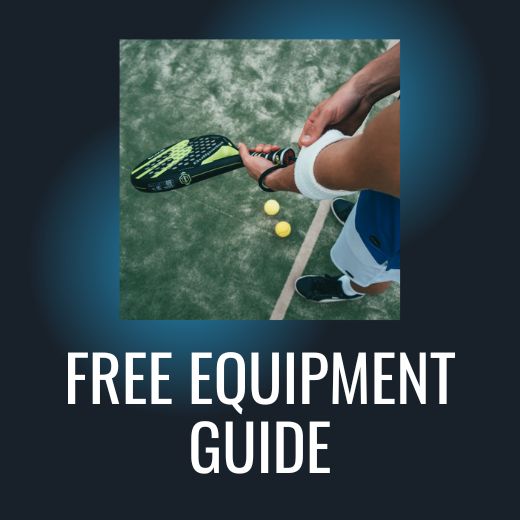
The Padel School Equipment Guide
In this guide we explain everything about the different rackets so you can make an informed decision and find a weapon that enhances your game instead of hinders it!
Conclusion
Playing padel in wet and cold conditions might not feel as exciting as a sunny summer match, but it can be one of the best opportunities to sharpen your skills. The challenges of slippery balls, faster wall drops, and reduced power force you to lean on good technique, smarter positioning, and more precise shot selection. By continuing to train through the winter—and even adjusting your racket choice to suit the heavier, wetter balls—you’ll develop a more reliable defence, stronger tactical awareness, and cleaner technique.
So don’t let the weather slow your progress. Embrace the winter sessions, and when the warm months return, you’ll step onto the court with a noticeably stronger, more complete padel game.
Related Posts
Discover more insights, tips, and articles you might find useful

You Must Talk With Your Partner

You Must Learn the Flat Backhand

Wrist Action for Padel Serve
