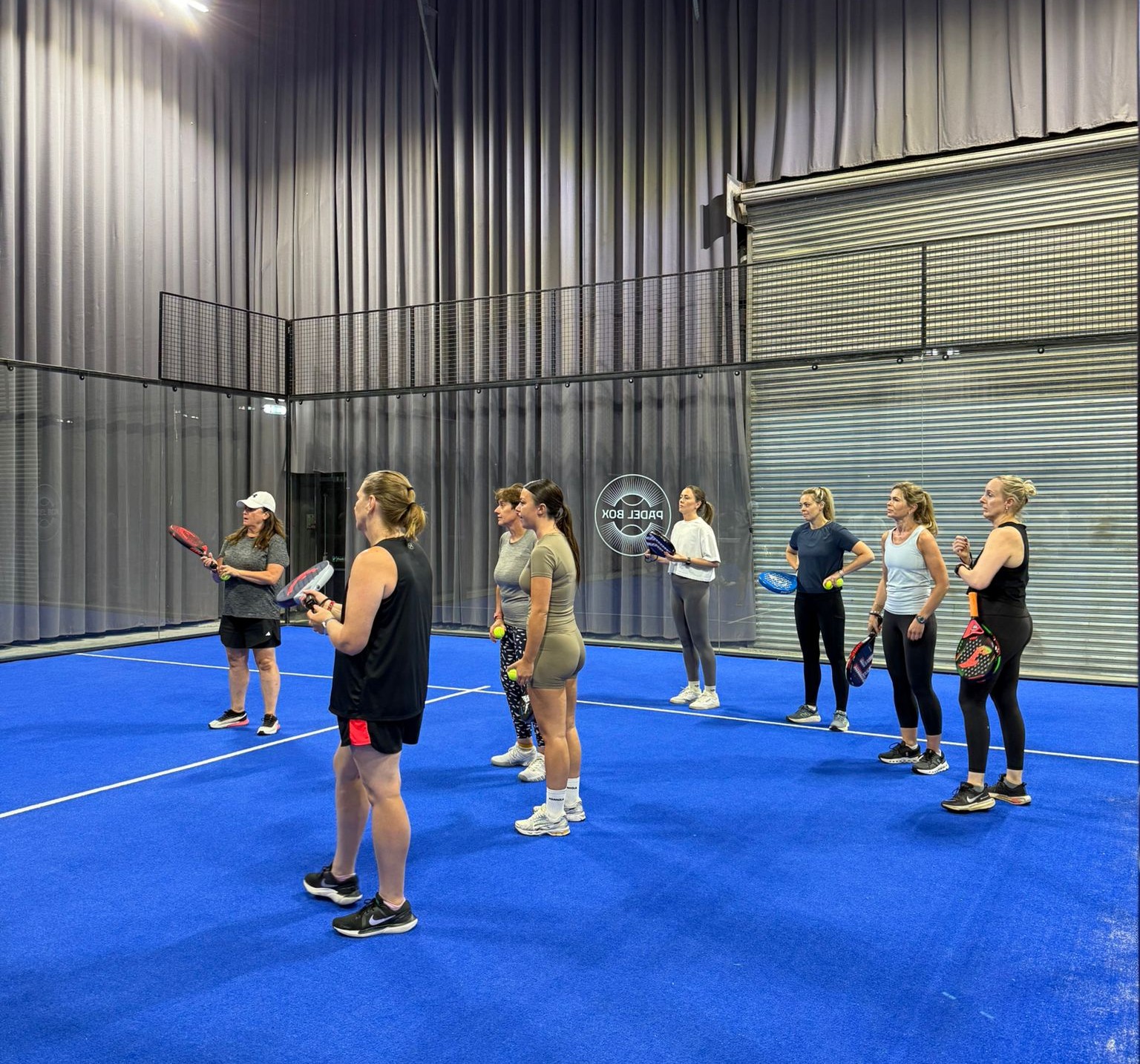
Padel court dimensions play an important role in shaping the dynamics and strategy of the sport. Standard doubles courts are smaller than tennis courts, enclosed by glass and fencing, and built to defined measurements.
This guide covers the standard dimensions and key layout features. If you are planning to build a court, confirm the latest technical requirements with the relevant governing body and your court supplier before construction.
Overview of Padel Court Dimensions
Court Size: A standard doubles padel court measures 20 metres in length and 10 metres in width. The compact dimensions support the doubles format and the use of the walls during play.
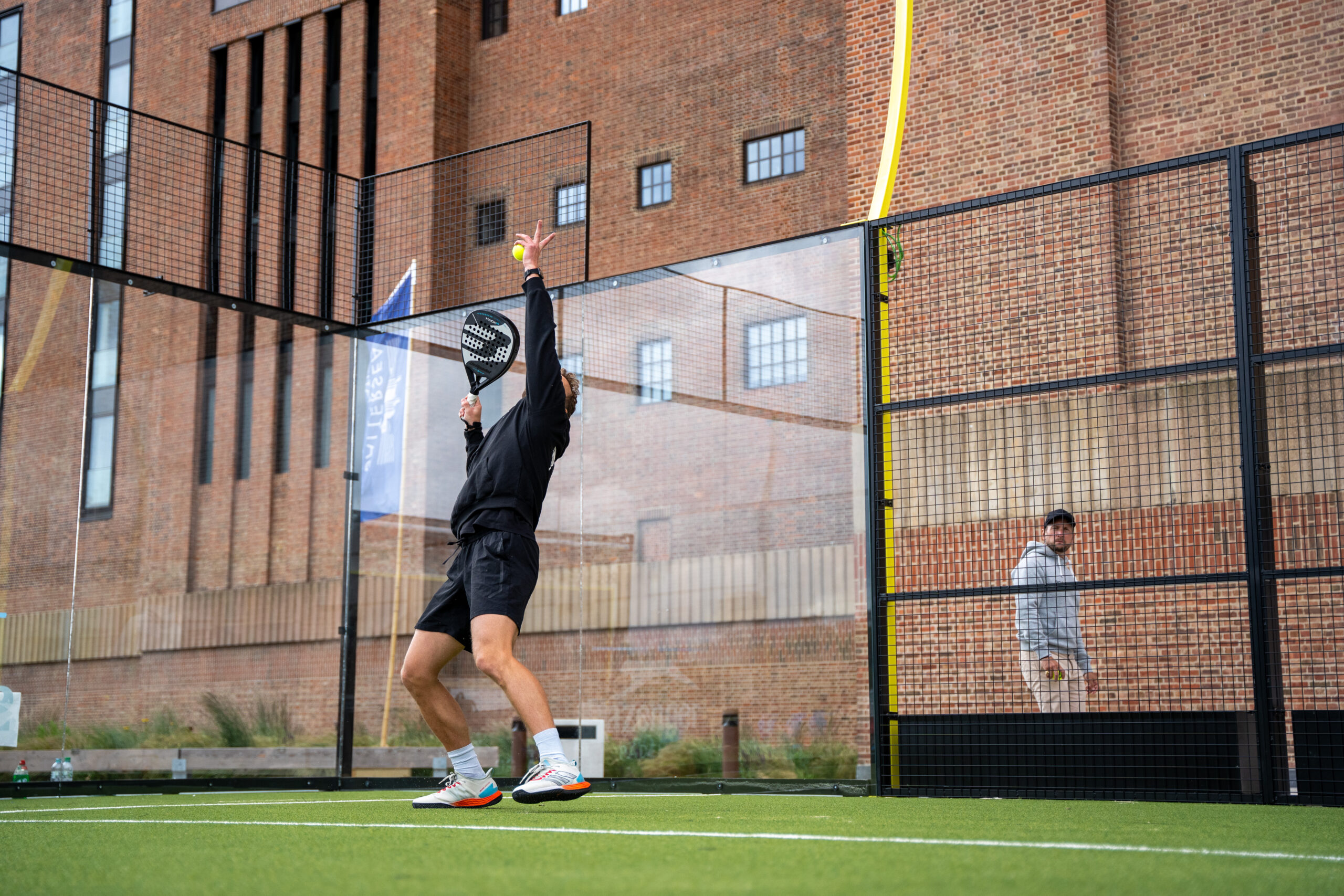
Wall Enclosure: The court is enclosed by glass and fencing that are part of the playing environment. After the ball bounces, players can use the permitted rebound surfaces to extend rallies and create different tactical options.
Details of the Padel Court Walls
Back Walls: The back wall forms part of the playing area and is combined with fencing above it. If you want to learn how the rebound changes the game, see our Back Glass guide.
Side Walls: The side enclosures combine glass and mesh sections according to the standard court specification. The precise construction should be confirmed against current technical requirements when building a court.
Net Height and Positioning
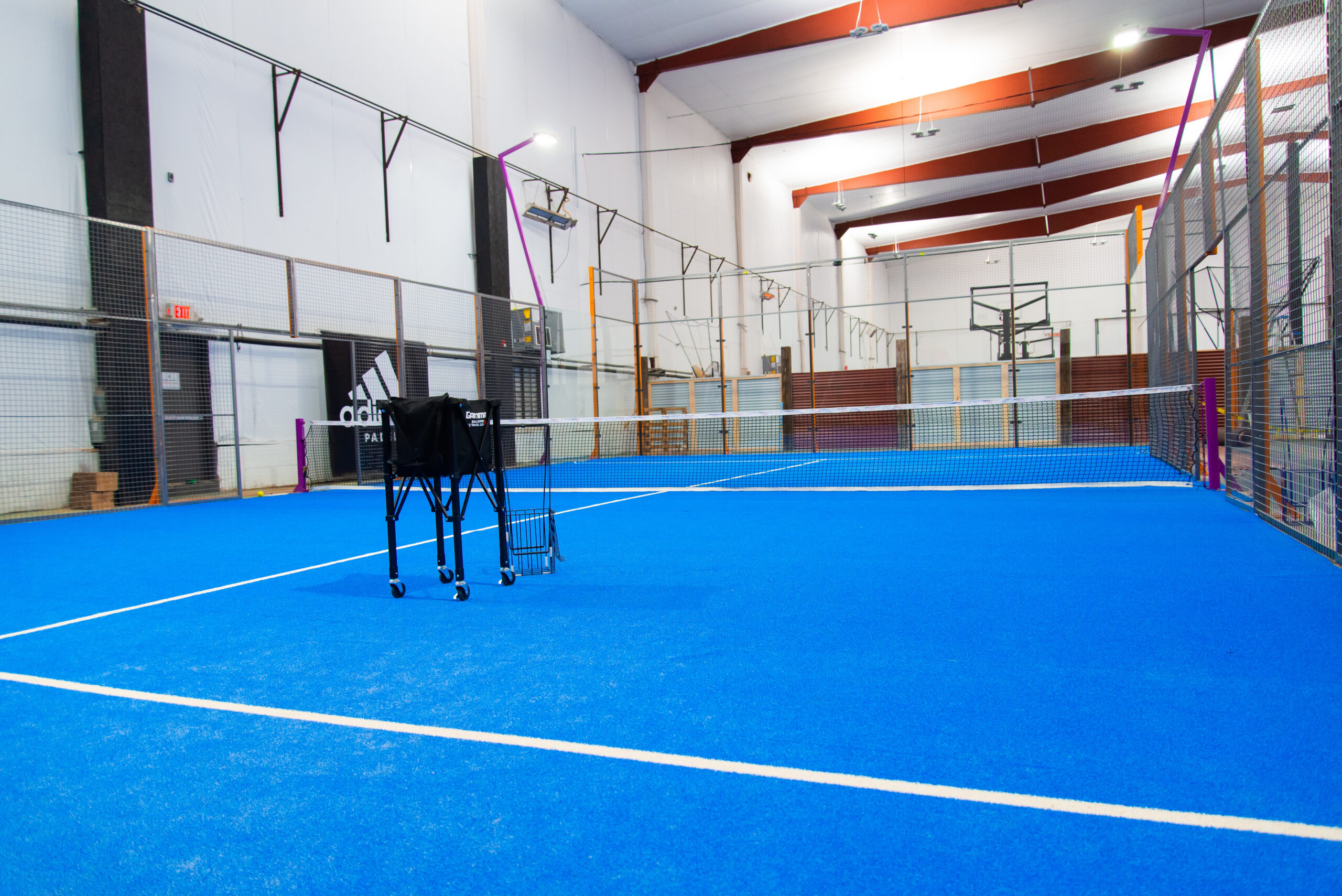
Net Height: The padel net is lower in the centre than at the ends. For court construction or competition use, confirm the current official specification rather than relying on an older article alone.
Net Positioning: The net divides the court equally into two halves and forms the central reference point for serving, attacking and defensive positioning.
The Service Boxes and Their Layout
Service Line and Boxes: Each half contains service boxes divided by a centre service line. These markings define where the ball must bounce when serving.
No-Volley Zone: Unlike pickleball, padel does not use a no-volley zone or “kitchen”, so players can move close to the net during rallies.
Surface and Court Markings
Court Surface: Modern padel courts commonly use artificial turf systems designed for the sport. Surface specification can vary, so clubs should choose a system appropriate to the court, climate and intended level of play.
Court Markings: The service lines and centre line form the key court markings. Construction should follow the applicable official dimensions and tolerances.
Why Padel Court Dimensions Matter for Gameplay
Rally Dynamics: The compact court and rebound surfaces create a game based heavily on positioning, control and the ability to use the walls.
Close-Range Play: The dimensions keep all four players relatively close to the action, encouraging teamwork, volleys and quick exchanges.
Building a Padel Court: Key Considerations
Space Requirements: Allow for more than the playing dimensions alone. Access, foundations, drainage, maintenance, lighting, spectator areas and any out-of-court play requirements can all affect the total footprint.
Materials and Costs: Court specification, surface, foundations, enclosure, lighting, shipping and installation all affect cost. Use current supplier quotes and local planning advice for a live project.
Conclusion
Understanding the basic court dimensions helps players understand the sport and helps clubs begin planning a potential installation. For a real construction project, always confirm the current technical specification and local requirements before ordering or building.