Whether you are a high-level tennis player or a recreational player looking for a new racket sport, moving into padel involves more than simply transferring your existing strokes.
Tennis gives you useful fundamentals, but the long-term transition depends on learning a different tactical game, different movement patterns and different decision-making.
Recognise They Are Different Sports
The most important first step is accepting that padel needs to be learned on its own terms.
Your tennis background can help with coordination, volleys and overhead skills, but the walls, positioning and doubles structure change how points are built.
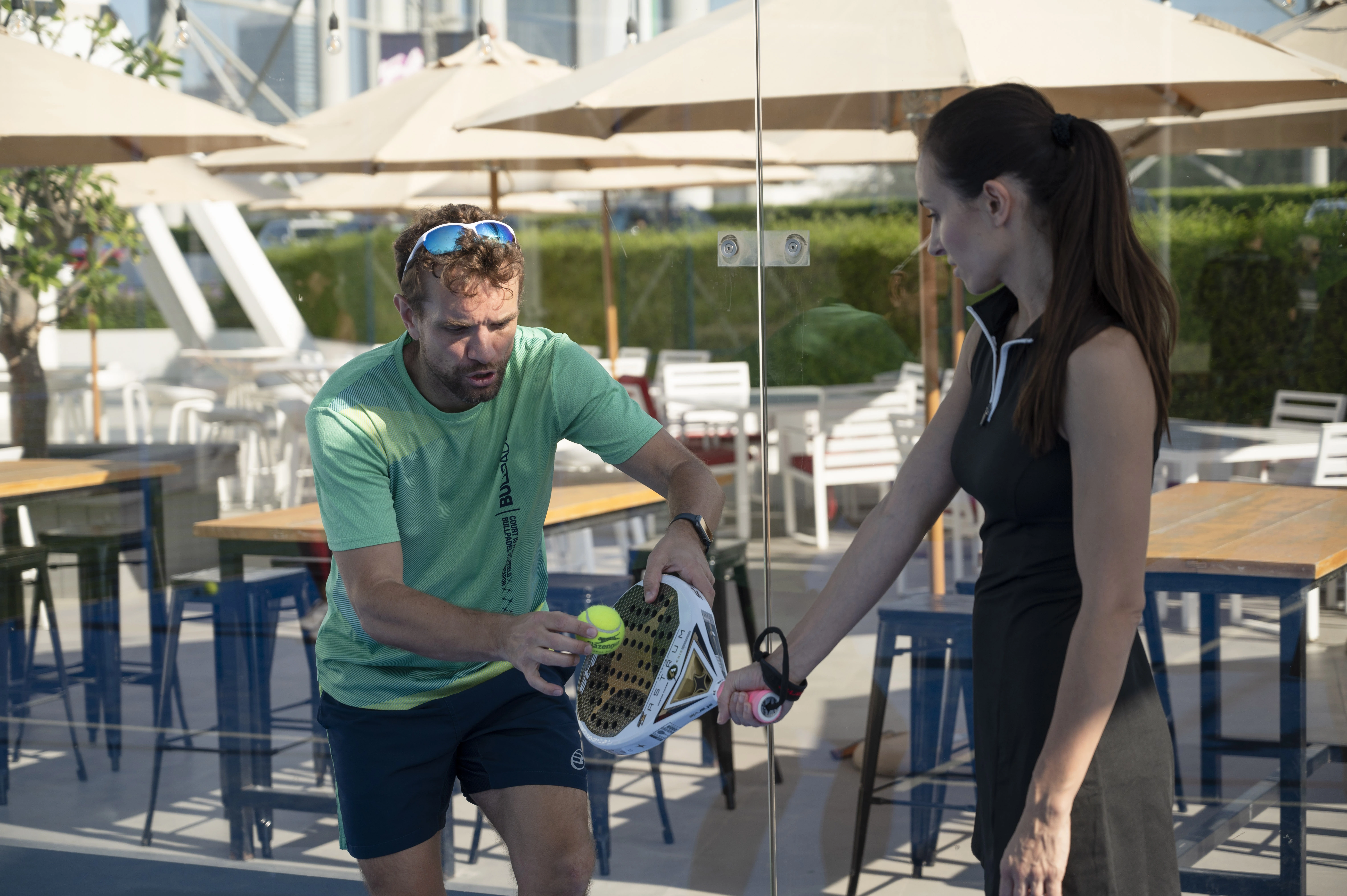
Invest in Good Coaching Early
Because the first few games can feel easy, tennis players sometimes delay getting padel-specific coaching.
Learning the fundamentals early can help prevent tennis habits becoming ingrained in situations where a different padel solution would be more effective.
Expect a Learning Curve
The early progress can be quick, but tactical understanding takes time. Using the walls, learning the right court positions and knowing when to attack or defend become increasingly important as the level rises.
Be patient with that process rather than assuming your tennis level should translate directly.
Matches Are an Important Part of Learning
Padel is highly situational, so matchplay is essential. You need to experience lobs, transitions, rebounds and partner movement in live points.
Combine technical practice with enough matches to learn how the skills fit together.
Use Structured Learning Between Sessions
Online learning can complement in-person coaching, particularly when you want to revisit a concept before your next session.
At The Padel School, current options include Court Ready, the Basic Roadmap, higher-level Roadmaps and our Player Membership.
Summary
A tennis background is an advantage, but it is most useful when you combine it with the willingness to learn new habits.
Keep the transferable skills, let go of the parts that do not suit padel and build your understanding around positioning, patience and teamwork.