Group Coaching vs Private Lessons: When to Use Each
When it comes to improving at padel, there is no single coaching format that works for every player.
Some players benefit from the focused attention of a private lesson. Others develop faster when they train in a group, where they can learn alongside different players and apply skills in more realistic situations.
The important question is not simply whether group padel coaching or private padel lessons are better.
It is: what does the player need to improve right now?
Understanding the difference between the two formats can help players make better use of their coaching time and help clubs create programmes that support players at different stages of their development.
What Is the Difference Between Group and Private Padel Coaching?
The biggest difference is the amount of individual attention and the environment in which learning takes place.
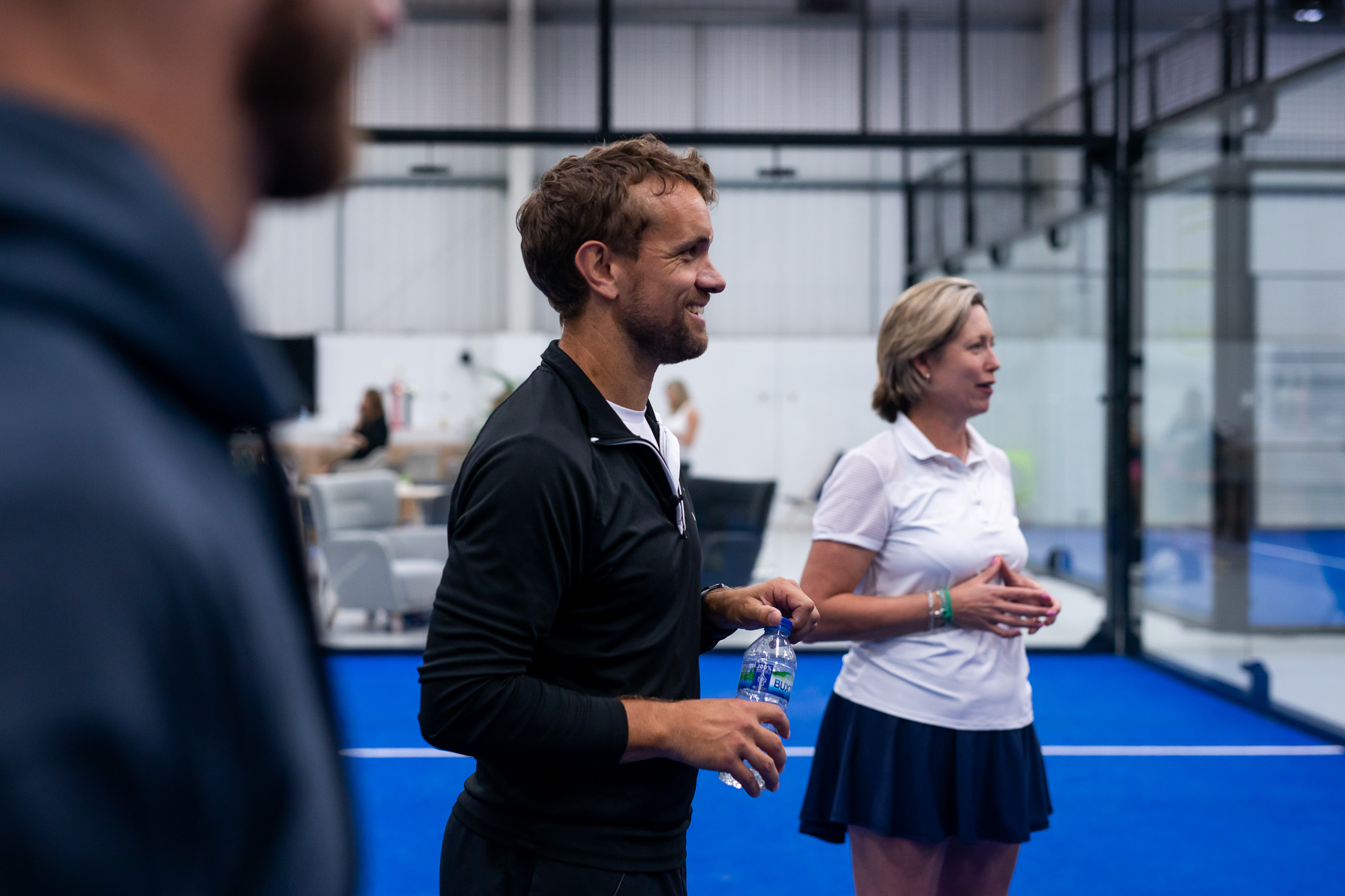
In a private padel lesson, the coach is working directly with one player, or sometimes two. This allows the session to be built around very specific player goals. The coach can spend more time analysing technique, identifying individual problems and adjusting exercises based on how the player responds.
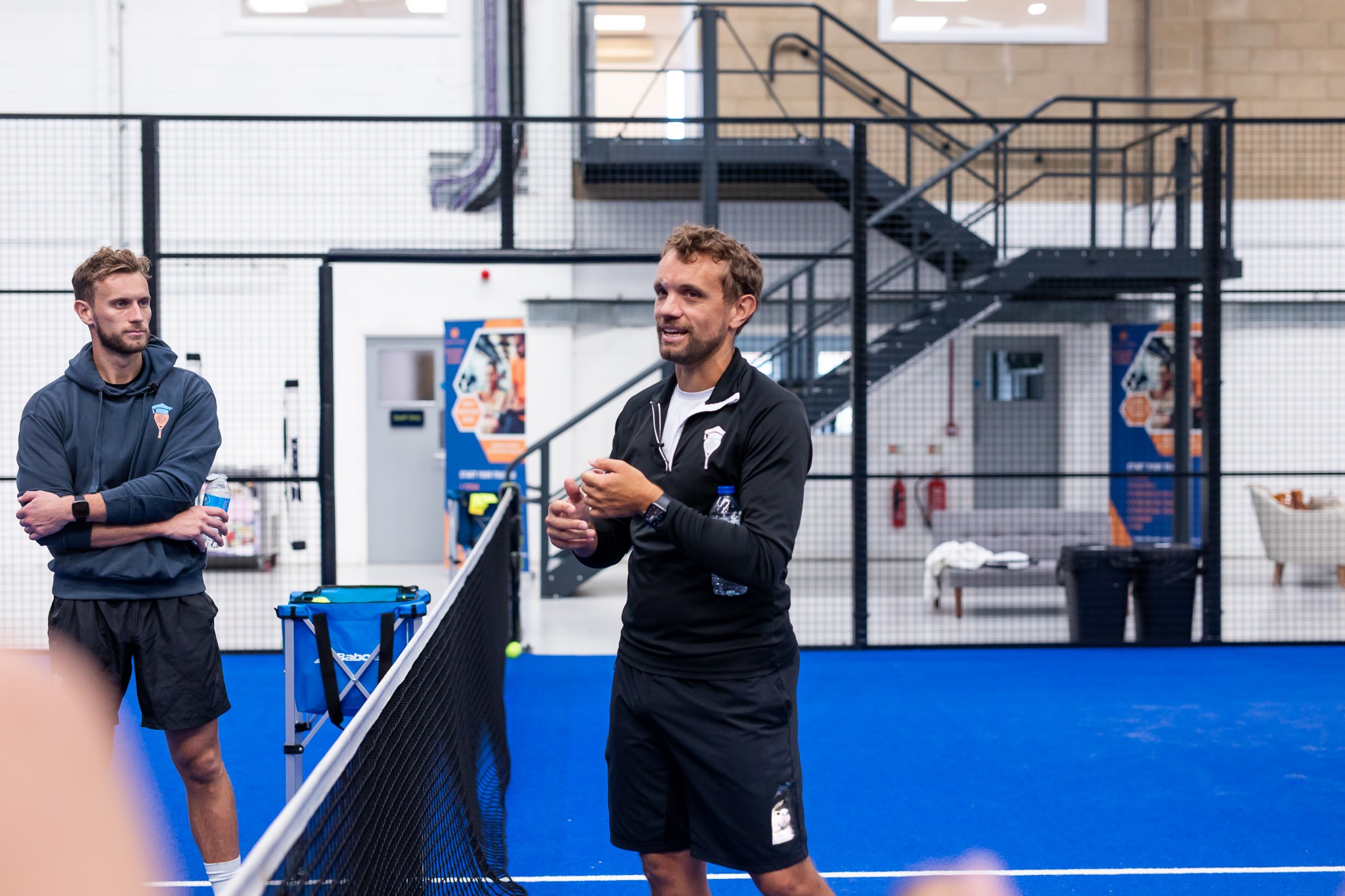
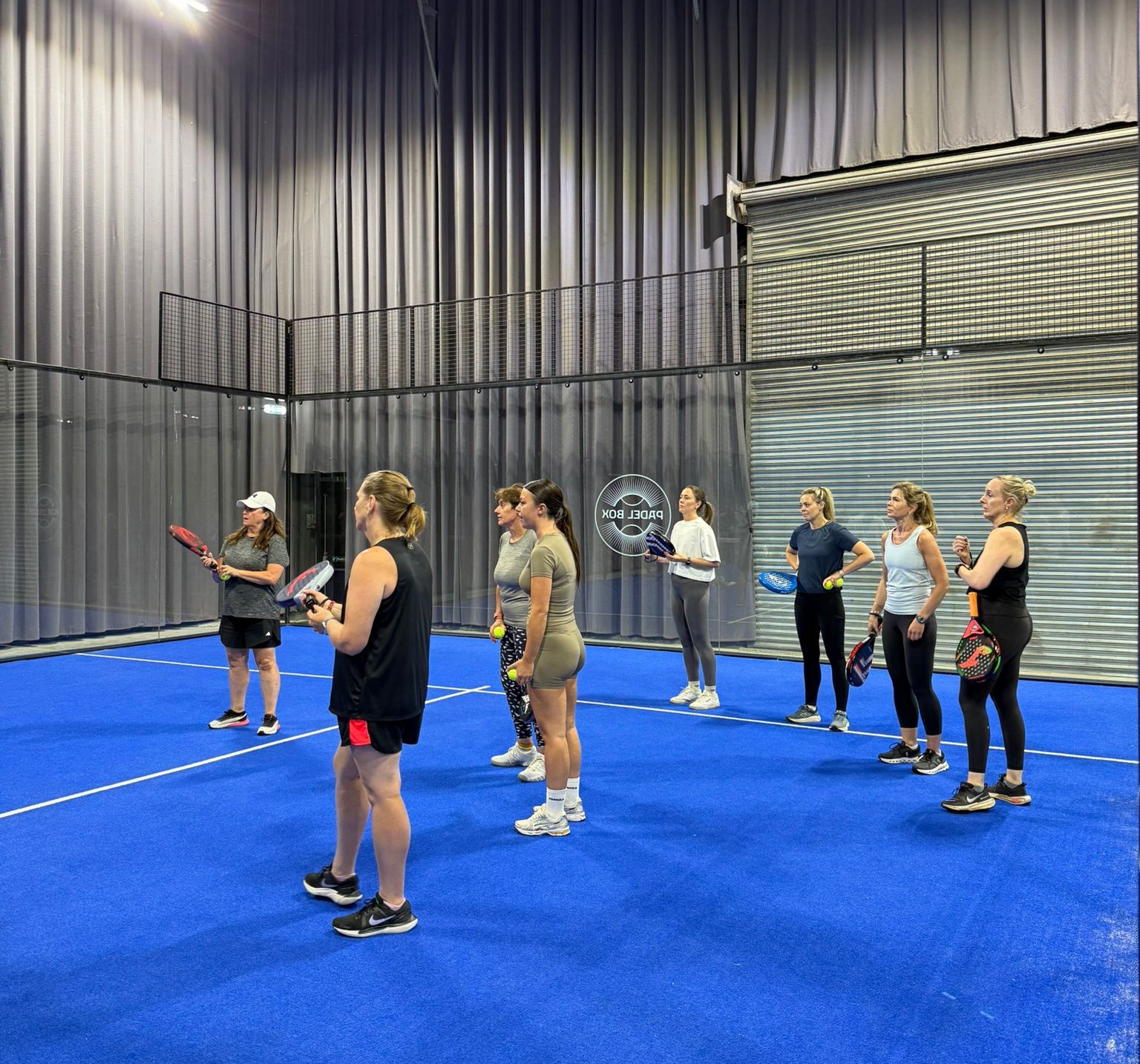
Group padel lessons work differently. Several players train together, meaning the coach needs to create a session that works for everyone while still providing individual feedback. The advantage is that players can learn alongside others, experience different situations and often get more opportunities to apply skills in a game-like environment.
Neither format automatically produces better results. The effectiveness depends on the player's goals, level, the quality of the coaching and how the session is structured.
The Benefits of Private Padel Lessons
Private coaching is particularly useful when a player has a specific problem they want to address.
Perhaps their backhand breaks down under pressure. Maybe they struggle with the back glass, are inconsistent with their bandeja or don't understand why they keep losing the net. A private session gives the coach the opportunity to focus almost entirely on that issue.
The personalised nature of private coaching also means the coach can adjust the session in real time.
If a player understands something quickly, the coach can progress the exercise. If they are struggling, the coach can slow things down and find another way to explain or demonstrate the movement.
This makes private lessons useful for technical development, detailed feedback and players who have a clear individual goal.
They can also be valuable when a player is preparing for competition. A coach can analyse their current game, identify areas that may be affecting their performance and create exercises around the situations they are likely to encounter in matches.
However, private coaching has a limitation: the player is often practising in a controlled environment with a coach rather than constantly making decisions against an opponent.
That is where group coaching can add something different.
Why Group Padel Coaching Is So Valuable
Group coaching creates an environment where players learn with and from other people.
Padel is not played in isolation. It is a decision-making sport involving opponents, a partner, positioning, communication and constantly changing situations. A well-structured group session can introduce these elements much more naturally than a purely individual lesson.
For example, a coach might introduce a new volley technique and then move players into a drill where they have to use that volley against different balls. Players aren't simply repeating the movement. They are beginning to understand when and why they should use it.
There is also a social benefit.
For beginners, joining a group can make the first stages of learning padel less intimidating. Players meet others at a similar level and can develop regular playing relationships outside the coaching session.
For intermediate players, groups can create a useful competitive environment. Training with different players exposes them to different playing styles and helps them adapt their decision-making.
This is one reason group padel lessons can be particularly effective for tactical development and match play.
Can Group Coaching Still Provide Individual Feedback?
Absolutely.
The fact that a coach is working with several players does not mean individual development has to disappear.
The quality of the session structure is important.
A strong coach can observe individual players while the group is working through an exercise, give short and specific feedback, and then allow the player to immediately try the adjustment again.
For example, rather than stopping an entire group to explain one player's mistake, the coach can give that player a simple correction while the rest of the group continues. The player then has an opportunity to apply it within the same drill.
This requires good organisation and coaching methodology.
Group coaching should not simply mean putting four players on a court and feeding balls to them. The coach needs to understand the objectives of the session, manage the group effectively and create enough repetition and decision-making opportunities for every player.
When Should a Beginner Choose Group or Private Coaching?
For many beginners, group coaching can be an excellent starting point.
A beginner is learning much more than how to hit a forehand. They are learning how the court works, where to stand, how to move, how to communicate with a partner and how points develop.
Learning these things alongside other beginners can make the experience more enjoyable and social.
A group also gives new players the chance to develop relationships with people they can play with after the lesson. This can be an important part of keeping someone engaged with the sport.
That doesn't mean private coaching isn't useful for beginners.
A new player who feels nervous, wants additional support or needs help with a particular technical issue may benefit from one-to-one attention. A private session can also be useful alongside group coaching rather than instead of it.
When Are Private Lessons Most Useful?
Private coaching can become particularly valuable when a player reaches a point where their development needs become more specific.
A beginner might benefit from learning the foundations within a group. Later, they may discover that one particular part of their game is holding them back.
Perhaps they are making too many errors when defending from the back of the court. Maybe they struggle to transition from defence to attack. Or perhaps their technique is fine, but they are making poor decisions during matches.
A private lesson allows the coach to spend more time investigating that specific issue.
It can also be useful for players returning from a break, preparing for a competition or looking to make a significant change to their technique.
The key is that private coaching works best when the additional individual attention is being used for a clear purpose.
How Group Coaching Supports Long-Term Player Development
One of the biggest advantages of group coaching is that it can form part of a longer player development pathway.
Rather than treating each lesson as a separate experience, clubs can create structured programmes that take players from beginner through to intermediate and advanced levels.
A player might start with an introductory programme, move into beginner group coaching, progress into tactical sessions and eventually join match-play or competitive training.
This gives players a clear idea of where they are going next.
It also allows coaches to work on broader areas of development over time. Technical skills can be introduced, then developed through tactical exercises and eventually tested in match situations.
For clubs, this creates a coaching system rather than a collection of individual lessons.
Group vs Private Padel Lessons: Which Should You Choose?
The answer depends on the player's current needs.
If the goal is highly personalised feedback, detailed technical work or solving a specific problem, private padel lessons can be a useful option.
If the goal is to develop decision-making, practise skills in more realistic situations, meet other players and become more comfortable playing points, group coaching can offer a different set of benefits.
For many players, combining the two can be particularly useful.
A player might attend a weekly group session to develop their overall game and then book an occasional private lesson to address a specific issue. The individual session can then feed back into their group training, where they have the opportunity to practise the change in a more dynamic environment.
This creates a connection between individual coaching and match development.
What Makes a Good Group Coaching Session?
The number of players on court is only one part of the equation.
Good group coaching starts with a clear objective. Players should understand what they are working on and why it matters to their game.
The coach then needs to create exercises that give players enough repetition while also introducing movement, decision-making and realistic situations. The session should progress rather than simply repeat the same activity from beginning to end.
Individual feedback still matters, even within a group. Coaches should be able to identify common problems while also recognising when a particular player needs a different challenge or correction.
This is where coaching methodology becomes important.
The goal is not to make every player do exactly the same thing. It is to create a structured environment where every player can work towards the objective at an appropriate level.
Coaching Should Match the Player's Goal
The best coaching format can change as a player develops.
A beginner may initially benefit from a social group environment. As they progress, they might use private coaching to work on technique before returning to group sessions to apply it.
An experienced player may spend most of their time in competitive group sessions but use private coaching when they want to analyse a particular weakness.
There is no need to choose one format forever.
The most effective approach is to understand what the player is trying to achieve and then select the coaching environment that gives them the best opportunity to work towards it.
The Role of Clubs in Offering Both Options
For clubs, offering both group and private coaching creates a more complete player development system.
Private lessons provide a route for personalised coaching, while group programmes create opportunities for progression, community and match-based learning.
The two can support each other.
A club that understands this can create pathways where players move between different coaching formats depending on their goals and level. This also gives coaches more opportunities to understand their players and support their development over the long term.
Ultimately, group padel coaching vs private lessons is not really a question of which one is better.
It is about using the right format at the right time.
Private coaching can provide focus and individual attention. Group coaching can provide social learning, variety and opportunities to apply skills in realistic situations.
When both are structured around clear player goals and a consistent coaching methodology, they become complementary parts of a strong player development system.
Related Posts
Discover more insights, tips, and articles you might find useful